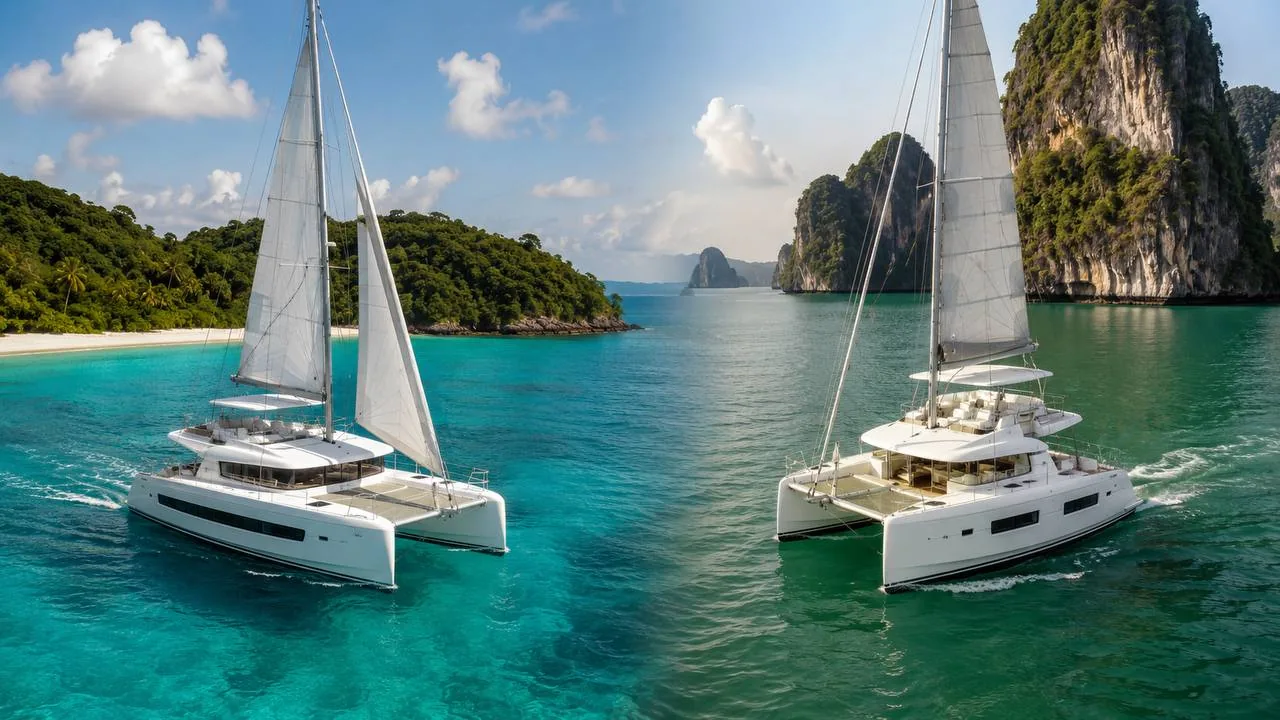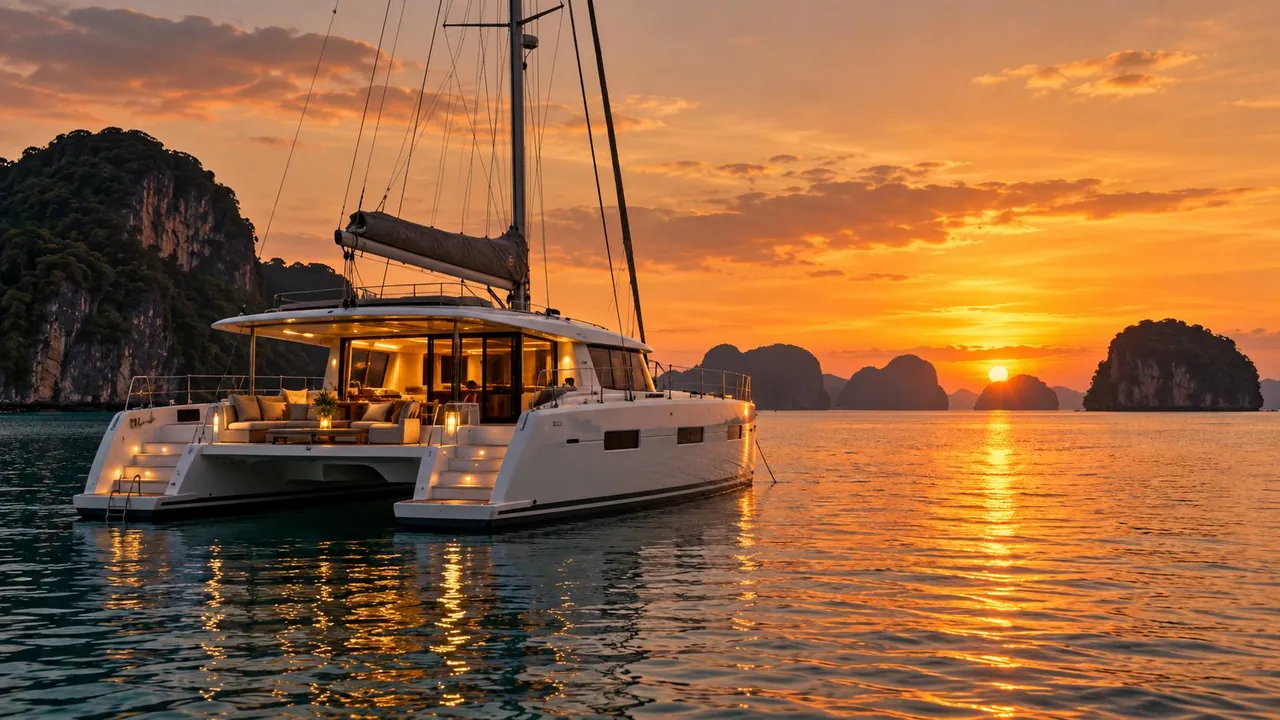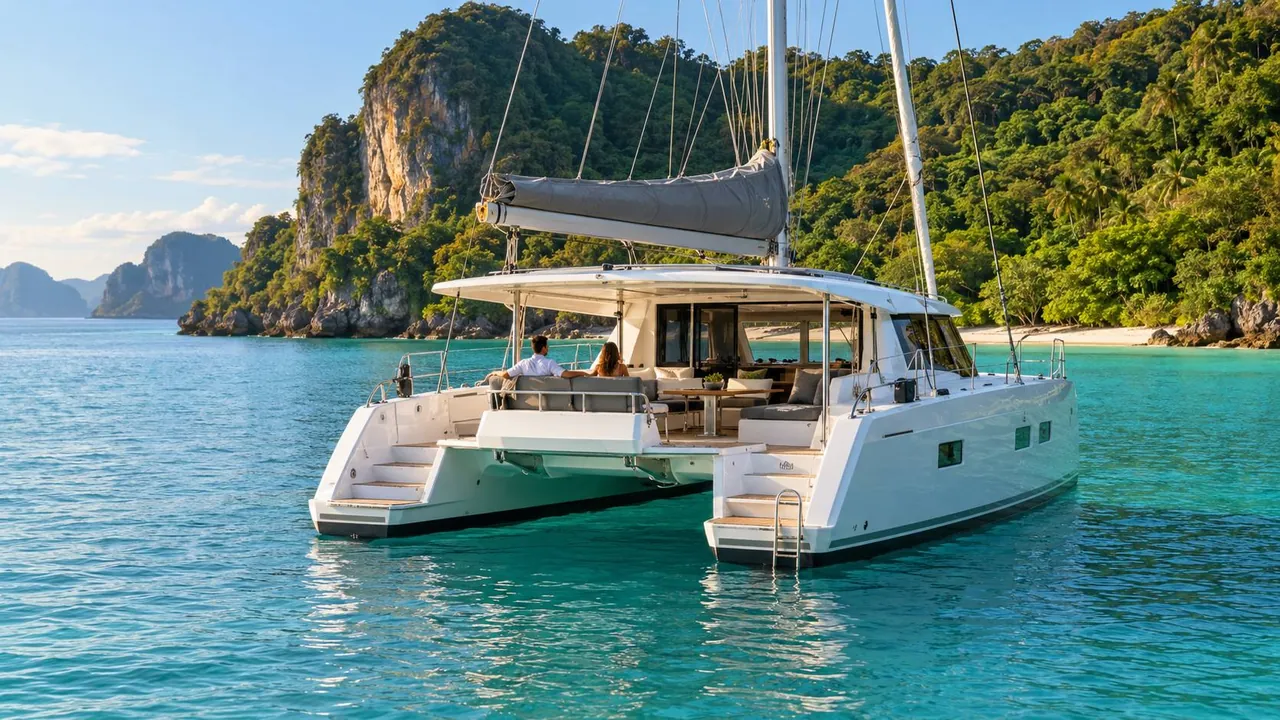
Watching a yacht under sail from the shore gives you only part of the picture. On board, you begin to notice how the sails change shape, how the crew responds to the wind and how a small adjustment to the course changes the way the boat moves.
When conditions allow the engines to be switched off, the sounds change too. Water passing the hull becomes more noticeable, along with the wind and the movement of the sails.
A private sailing charter in Phuket can introduce you to this experience while leaving time for swimming, lunch and the islands. The most useful first step is to tell the charter team that sailing itself is an important part of the day you want.
What a sailing yacht charter actually means
A sailing yacht has sails, but it can also use engines. A charter may include time under sail, time under power and periods when the two are used together.
This distinction matters when choosing your trip. Booking a sailing catamaran does not automatically mean every crossing will happen with the engines off. The captain considers the wind, sea conditions, route and available time before deciding how to make each passage.
On a crewed charter, the captain and crew handle the yacht. Guests can enjoy the experience without having to operate the sails or navigate.
At Star Sailing Club, the sailing catamarans include Lagoon 42 Silver Moon and Bali Catspace Siva. When you enquire, explain whether you mainly want an island day aboard a catamaran or would particularly like to experience a passage under sail.
Why the wind influences your route
Sailing depends on the direction of the wind as well as its strength. A yacht can sail with the wind coming from several different angles, and the crew adjusts the sails to suit the course.
It cannot sail directly into the wind. To make progress toward a destination upwind, a sailing yacht may need to travel on alternating angled courses. The turn between those courses is called a tack. The resulting route differs from the straight line you might draw on a map.
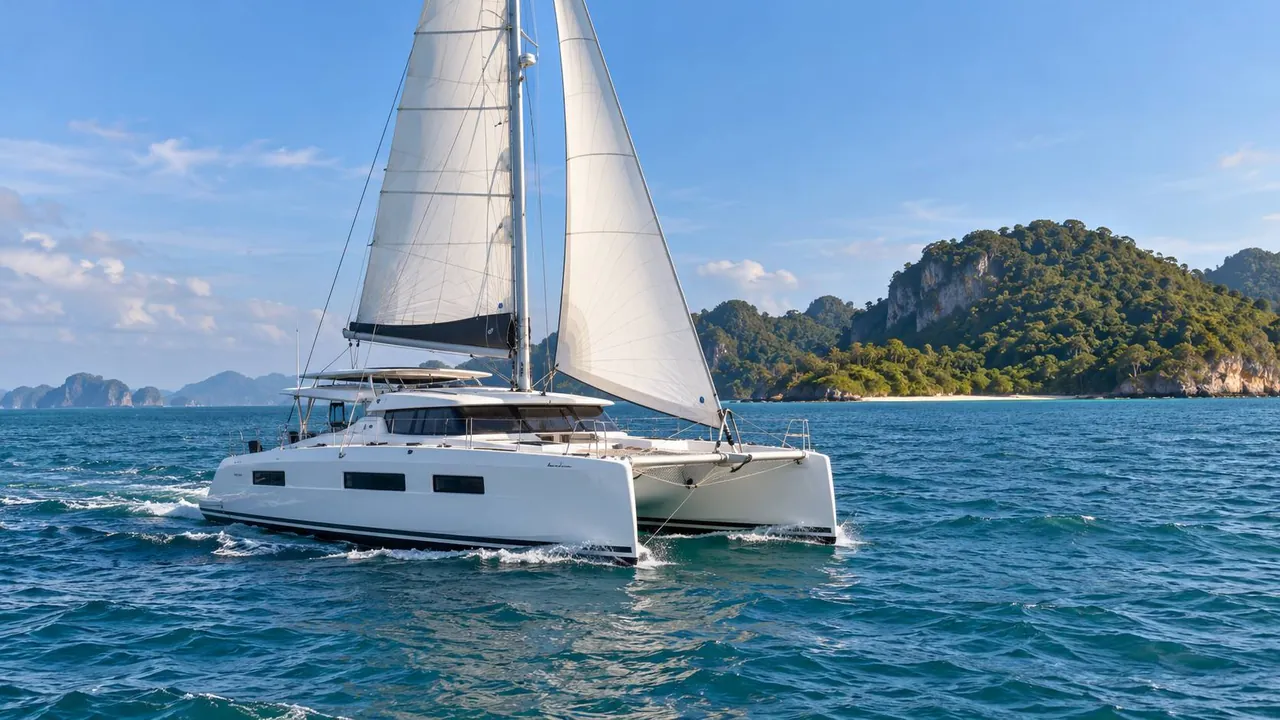
For a guest, the practical consequence is straightforward: the distance between two places does not tell you exactly how long the sailing passage will take.
If you want to spend more time sailing, flexibility about the route and stops can help. If reaching one particular island is essential, tell the team so they can explain how that affects the plan.
Why the engines may still be running
Engines are useful for controlled maneuvering when leaving a berth or returning to the marina. During a passage, they also help the yacht continue toward its destination when the wind is too light or unsuitable for the intended course.
Sometimes you will see a sail raised while an engine is running. This combination is known as motor sailing. The sail may assist progress, but the yacht is not moving entirely through wind power.
Neither the presence of raised sails nor a photograph of the boat tells you whether its engines are off.
If you are especially interested in the quieter experience of traveling under sail alone, say so when planning your charter. The team can discuss an appropriate format, while the time actually spent sailing will depend on conditions on the day.
How your first sailing day begins
Your introduction starts before the yacht leaves the dock. Listen to the crew’s briefing and ask about anything unfamiliar, including where you can sit during departure and which areas need to remain clear.
As the boat gets underway, you have time to settle in and understand the layout. If the captain chooses a suitable opportunity to set sail, the crew prepares the equipment and positions the yacht for the operation.
Find a place to watch where you can see without being in the working area. A quiet question at the right moment can make the process much more interesting: which sail is being set, what the crew is adjusting or why the yacht has changed direction.
The crew’s attention comes first during maneuvers, so save longer conversations for a quieter stage of the passage.
What to notice once the sails are set
Watch the shape of the sails. Their position changes in relation to the wind and the yacht’s course. You may see the crew adjust a line, pause to observe the result and then make another small correction.
These adjustments are part of sailing. The crew keeps assessing how the yacht is moving and responding to changes around it.
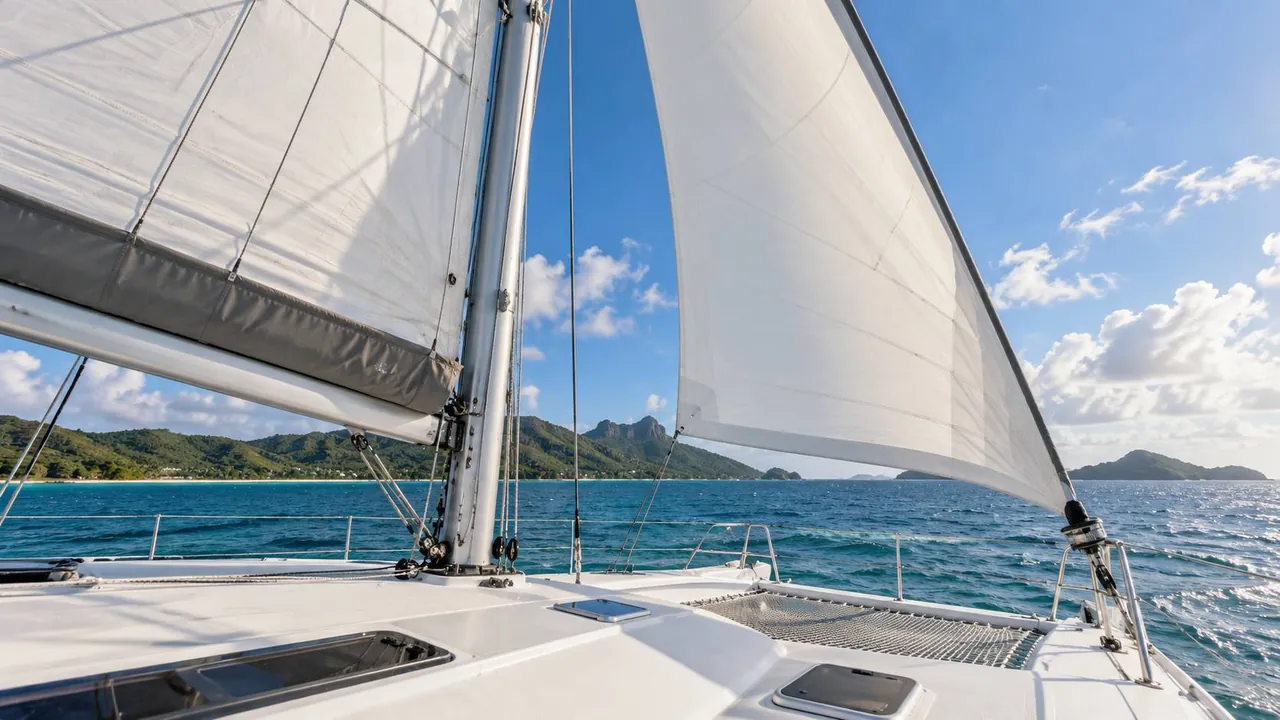
You may also notice that the wind feels different when the yacht turns. Looking at the sail while this happens helps connect the sensation on deck with the work being done by the crew.
There is no need to memorize nautical vocabulary before the trip. By the end of a passage, a few unfamiliar pieces of equipment can have a much clearer purpose simply because you have watched them being used.
Can guests take part
You can enjoy a crewed sailing charter entirely as a passenger. There is no expectation that you will pull lines, handle equipment or take a turn at the wheel.
If you would like to participate, ask in advance. The captain will decide whether any involvement is appropriate for the conditions, yacht and stage of the trip. An opportunity to try steering should always be discussed rather than assumed.
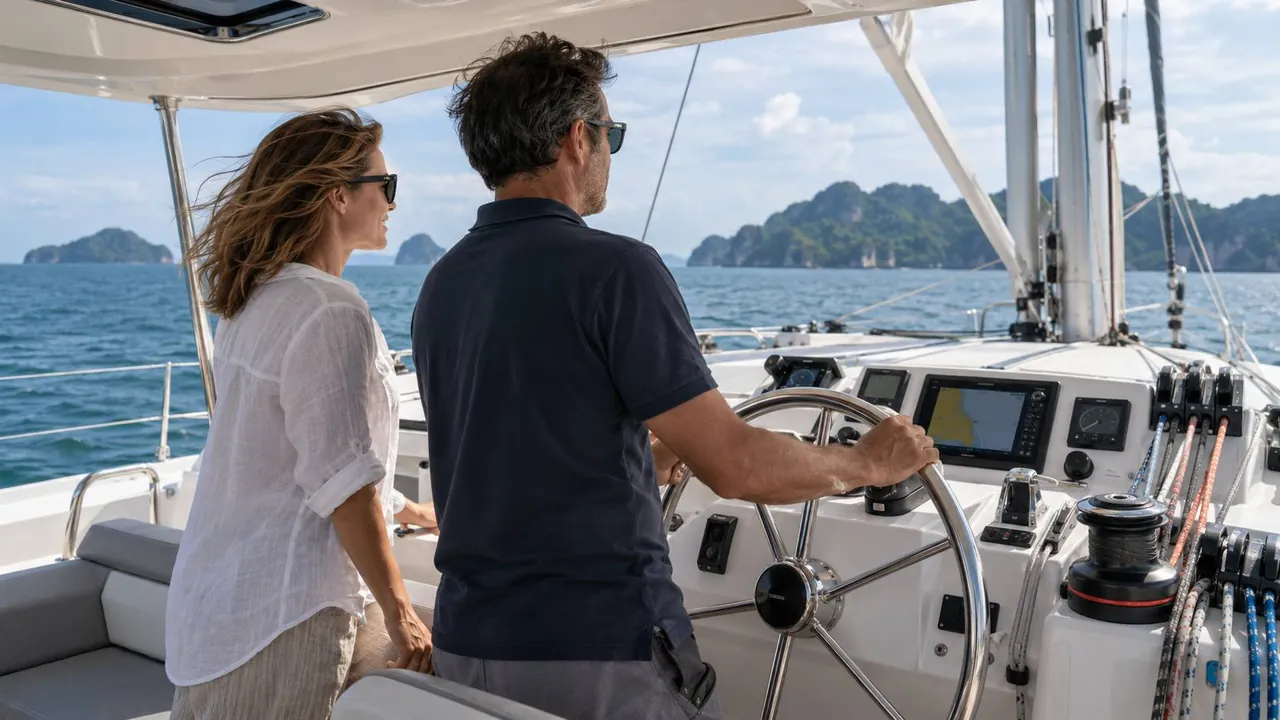
Stay clear of moving equipment and loaded lines, and follow the crew’s directions about where to sit or stand. The best place for a photograph is a position the crew has confirmed is suitable.
A day charter offers an introduction to sailing. If you want to learn boat handling systematically, a dedicated course with an instructor is the appropriate next step.
Combine sailing with time at anchor
Your whole group does not have to share the same level of interest in sailing. One guest may enjoy watching the crew while another reads or takes in the views from a suitable seating area.
A stop at anchor brings everyone together again. Depending on the agreed itinerary and conditions, this may be the time for a swim, lunch or simply staying on board and enjoying the surroundings.
When planning, leave room for both parts of the experience. A schedule packed with island visits leaves less flexibility for a sailing passage. If sailing is a priority, ask the team to propose a day that gives it enough space.
Think about what your group would enjoy if the wind is light, too. An appealing route and time together aboard the yacht give the day value across different conditions.
Choose the boat and the experience together
Look beyond the photograph of a yacht with its sails raised. Consider where you will sit during the passage, the shaded areas, access between spaces and the arrangements for lunch and swimming.
Ask the charter team about the specific yacht you are considering and explain who will be joining you. A couple on their first trip and a group with mixed interests may want different ways of spending the day.
You can compare Lagoon 42 Silver Moon and Bali Catspace Siva through their individual yacht pages, then discuss which option suits your plans. Confirm the departure marina and proposed itinerary for your particular booking.
The most useful choice is a boat and program that fit what you actually want to experience on the water.
Plan your first sailing charter in Phuket
Send Star Sailing Club your preferred date, group size and priorities. Let us know if you would especially like to spend time under sail, observe the crew at work or photograph the yacht’s sails during the trip.
We can discuss the available catamarans and a suitable itinerary, including how the day may be arranged if the wind is light. The captain will make the final decisions about setting sail according to the conditions at sea.
For a first sailing experience, curiosity is a good starting point. Bring your questions, listen to the crew and leave time to enjoy the passage itself.