Every summer the same question arrives in our chat: it is the rainy season, is a boat trip even worth it? It is a fair question, and the honest answer surprises most people. From May to October the Andaman does not shut down. It changes character - and for travellers who know how to read it, the green season is one of the best times of the year to be on the water.
What the green season actually looks like
The name rainy season conjures a picture of grey weeks and permanent downpours. The reality on Phuket is different. Green-season rain usually arrives as a short, dramatic burst - often in the late afternoon or overnight - and then clears. Many days open bright and calm, the air rinsed clean, the island at its greenest. What changes most is not the amount of sunshine but the rhythm of the weather: it moves in windows, and the trick is simply to sail inside them.
That is exactly what a private charter is built for. Unlike a fixed group tour, your day is planned around the forecast, the wind direction and the sea state - not the other way round.
The east side is the summer secret
Phuket's weather has a geography. The southwest monsoon blows from the west, which means the island itself acts as a giant windbreak. While the west-coast beaches take the swell, the east side - Chalong, Ao Po and the waters beyond - stays far calmer. And it happens that some of the region's most spectacular water lies exactly there.
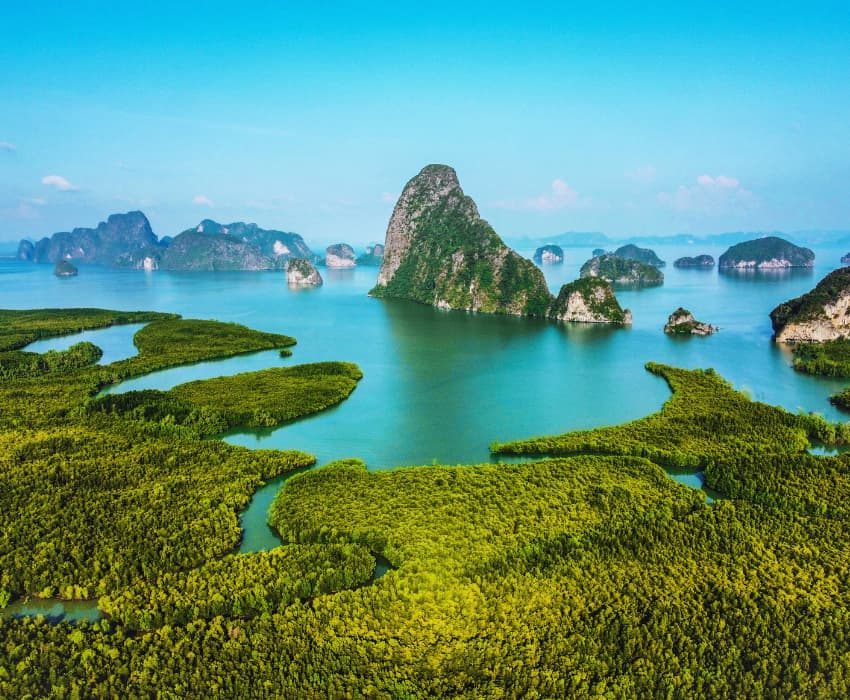
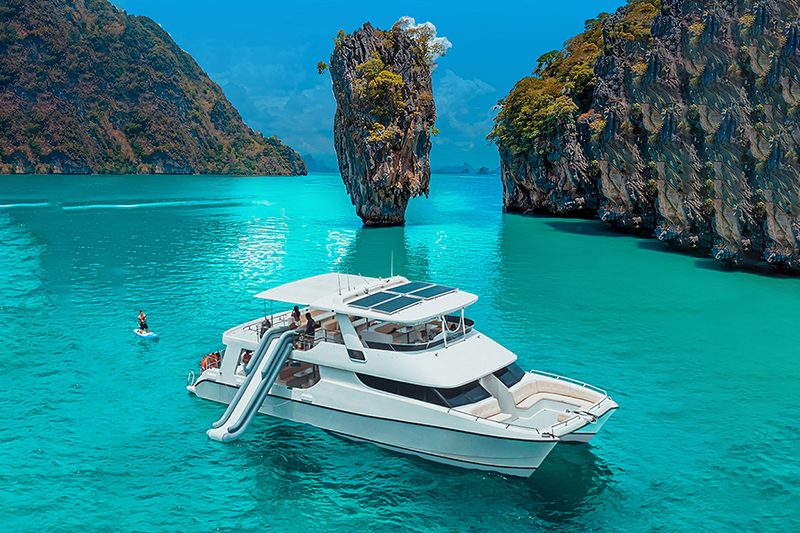
Phang Nga Bay is the star of the season. Ringed by land on three sides, the bay is naturally sheltered, and its limestone towers look their most cinematic under moving summer skies. The hongs and sea caves work on the tide, not the season, and with fewer boats around you often have lagoons entirely to yourself. Our full Phang Nga guide covers the route in detail.
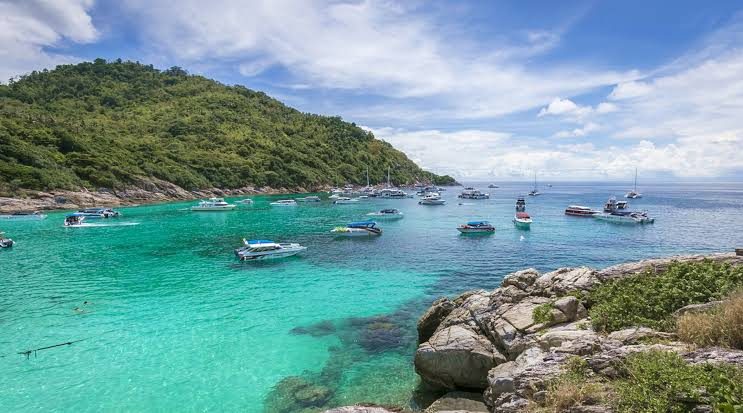
The nearby east-coast islands - Naka, Maiton, Coral Island - also stay very reachable on most summer days. Racha Yai, further south in open water, becomes a conditions-dependent call: on settled days it is as glorious as ever, and your captain will tell you honestly when it is not the right day for the crossing.
Why regulars book summer on purpose
- Empty anchorages. The bays that host a dozen boats in January often hold one or two in July. The sense of having the Andaman to yourself is real.
- Availability. The best boats and the best captains have open calendars. Short-notice trips - even same-week - are genuinely possible.
- The light. Photographers quietly love this season. Towering clouds, silver light on the water, rainbows after a squall - the skies do things they never do in the dry months.
- The island is green. The karsts and headlands are covered in fresh jungle, and the contrast with the sea is at its strongest.
- Better value. Outside peak dates, there is more room to build a generous day for the same budget.
How we plan a summer charter
A green-season day is planned differently, and that is where an experienced local crew earns its keep.
- We watch the weather window, not the calendar. The forecast is checked the evening before and again at dawn. If the morning is the calm half of the day, the day starts earlier.
- We choose the sheltered side. Routes lean east and north - Phang Nga, the east-coast islands - where the island shields the water.
- We keep the plan flexible. A private charter can swap Racha for Phang Nga on the morning of the trip without drama. The day bends around the weather instead of breaking against it.
- We are honest. If a day is genuinely not right for the sea, we say so and move you to another date. Safety decisions always sit with the captain.
In the green season, book the morning. The sea is usually at its calmest before midday, afternoon showers - when they come - tend to arrive after three, and by then you are back at the pier with the whole day already banked.
What to bring in the summer months
- A light rain shell or windbreaker - showers are warm but wind on wet skin is not.
- A dry bag for phones and cameras.
- Reef-safe sunscreen. Summer sun between clouds is stronger than it looks.
- A sense of flexibility. The best green-season days are the ones planned loosely.
The honest bottom line
If your dates fall between May and October, do not write off the water. Expect a plan built around the forecast, expect the sheltered east rather than the open south on rougher days, and expect a version of the Andaman that most visitors never see - quiet, dramatic and green. Some of our best days of the year, and many of our guests' favourite photographs, come from exactly this season.