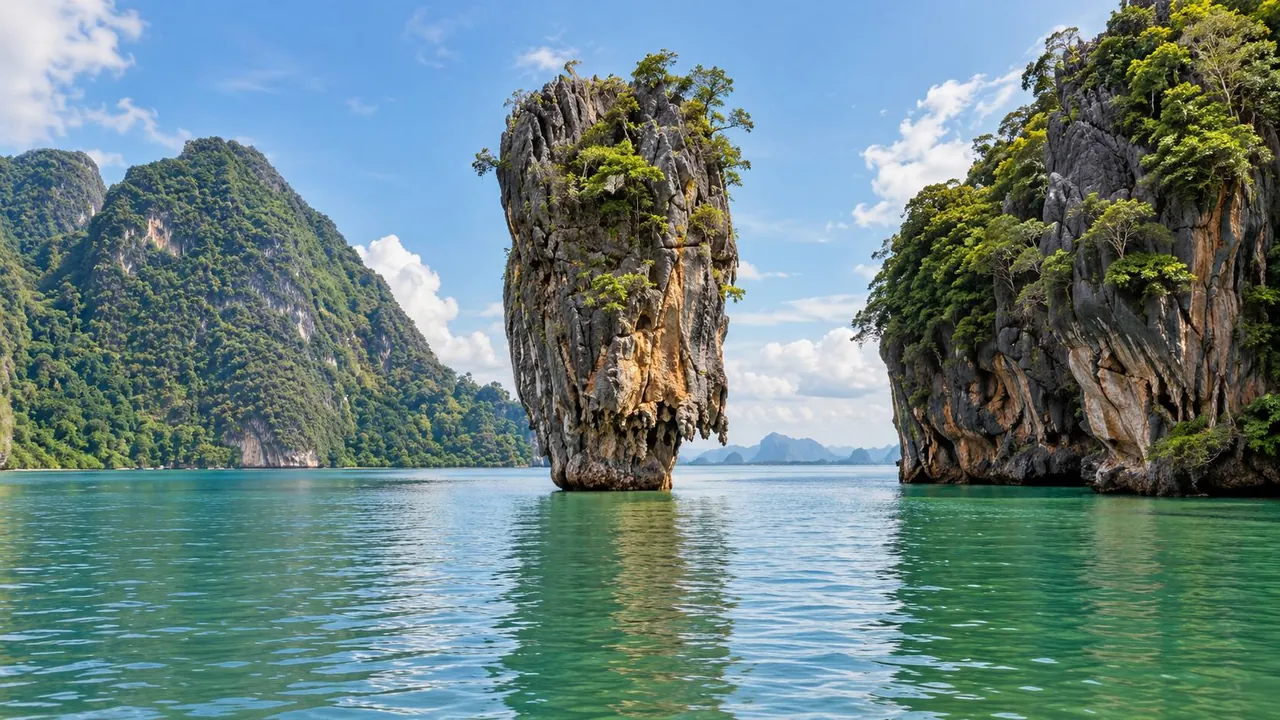
“James Bond Island” is the name most travellers recognize. The landscape itself has other names: the slender rock is Ko Ta Pu, and it rises near Khao Phing Kan in Phang Nga Bay. Knowing the distinction makes the place easier to understand: the famous rock and the island beside it are related landmarks, but they are not the same formation.
The area became internationally known after appearing in the 1974 film The Man with the Golden Gun. The nickname stayed, and visitors began to associate the whole setting with the movie. The Tourism Authority of Thailand traces the name “James Bond Island” to the film’s use of Ko Ta Pu.
A real landscape, not a film set
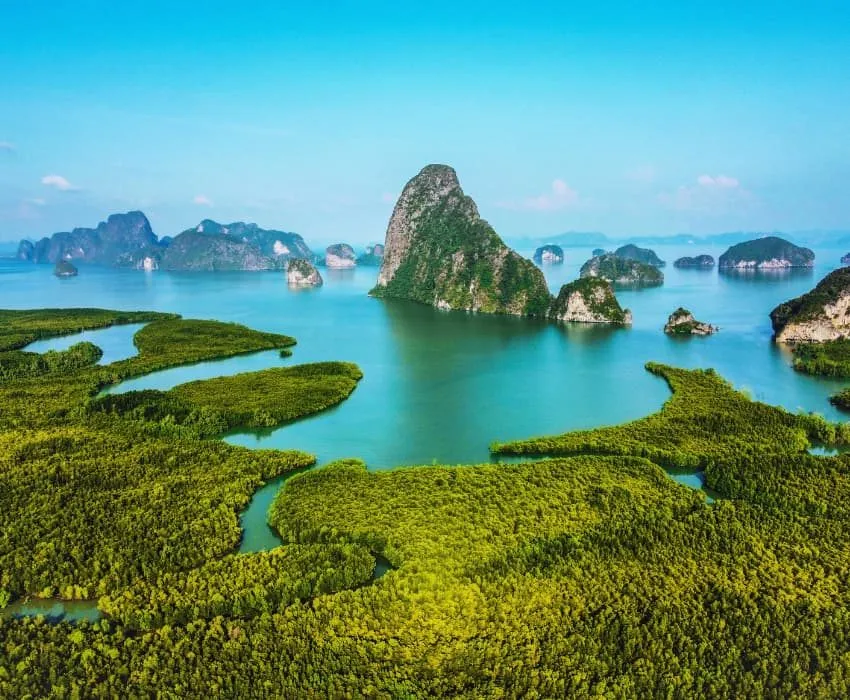
The movie introduced many people to the area, but it did not create its striking forms. Phang Nga Bay is a landscape of limestone islands, steep cliffs and openings shaped by natural processes over a very long time. Ko Ta Pu stands out because of its unusual shape and position against the water, but it is one part of a much larger scene.
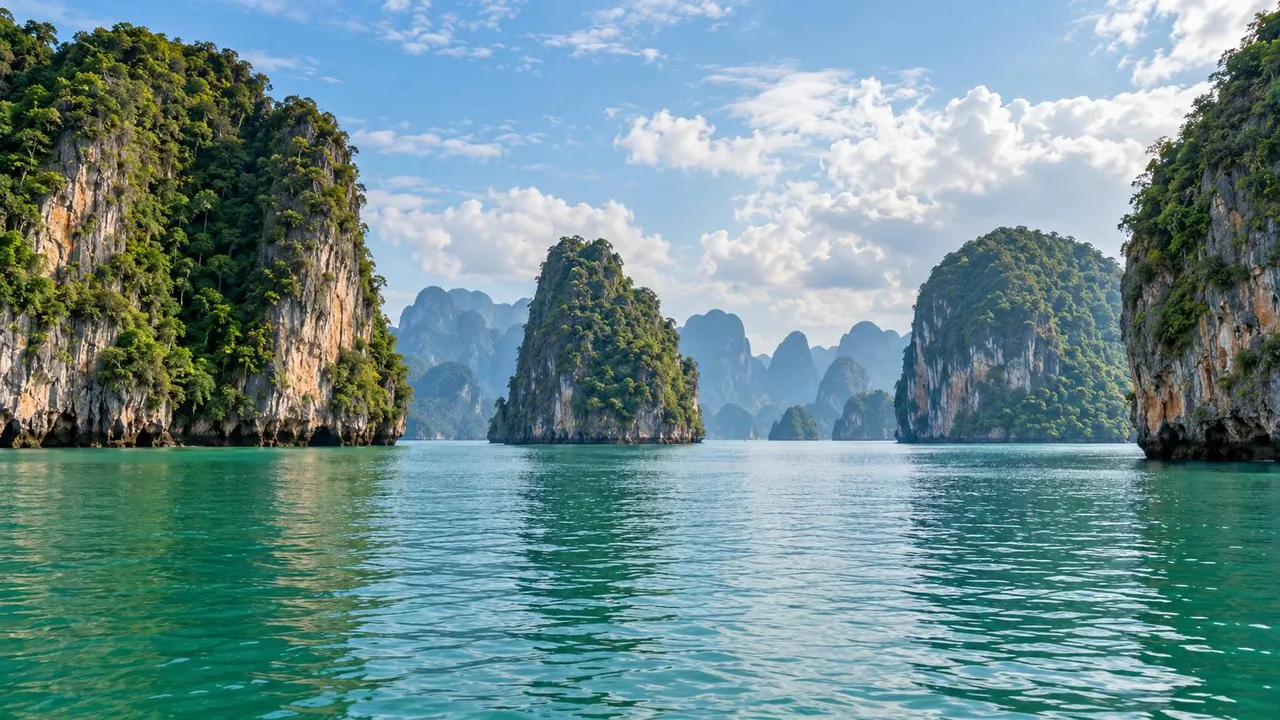
That is why the best memory of the area may not be a photograph of the famous rock alone. Look at the surrounding islands, notice how the cliffs change in shape and scale, and take in the contrast between the stone and the calm water. The setting gives the landmark its meaning.
Why the names can be confusing
On maps, tour pages and signs, the names Ko Ta Pu, Khao Phing Kan and James Bond Island may appear in different combinations. “James Bond Island” is the familiar visitor name for the area. Ko Ta Pu refers to the distinctive rock; Khao Phing Kan is the nearby island associated with it.
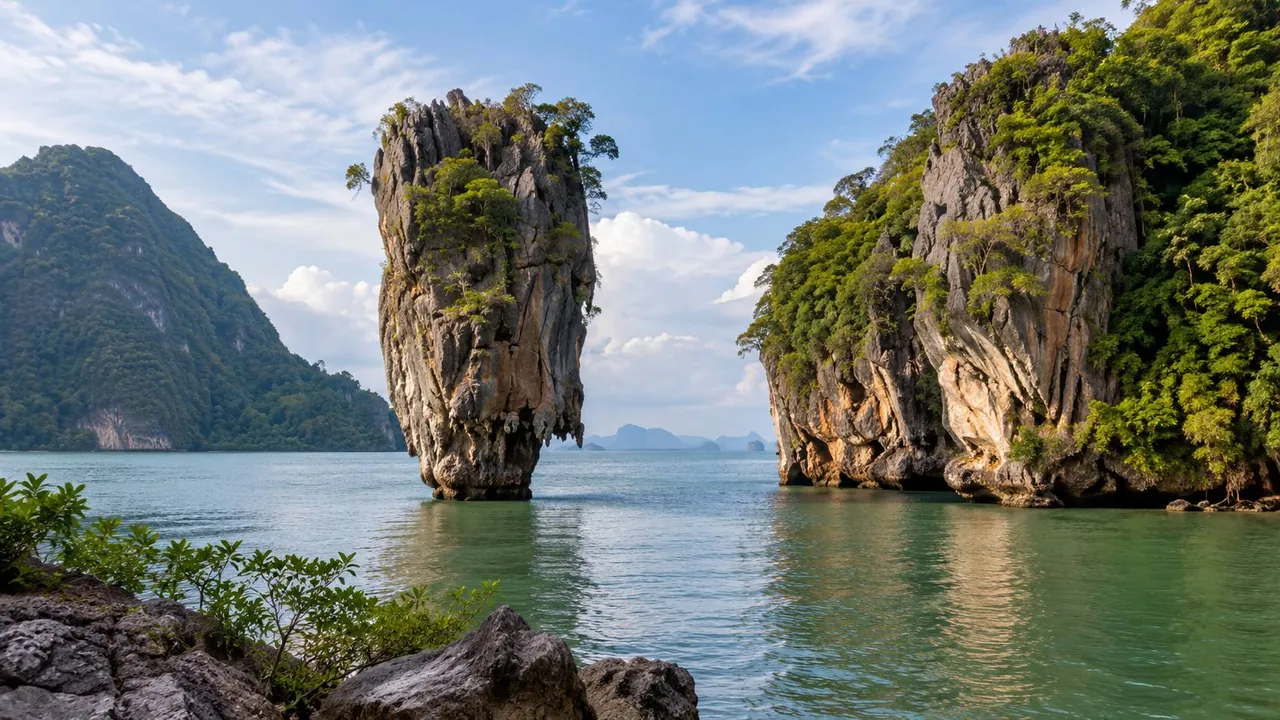
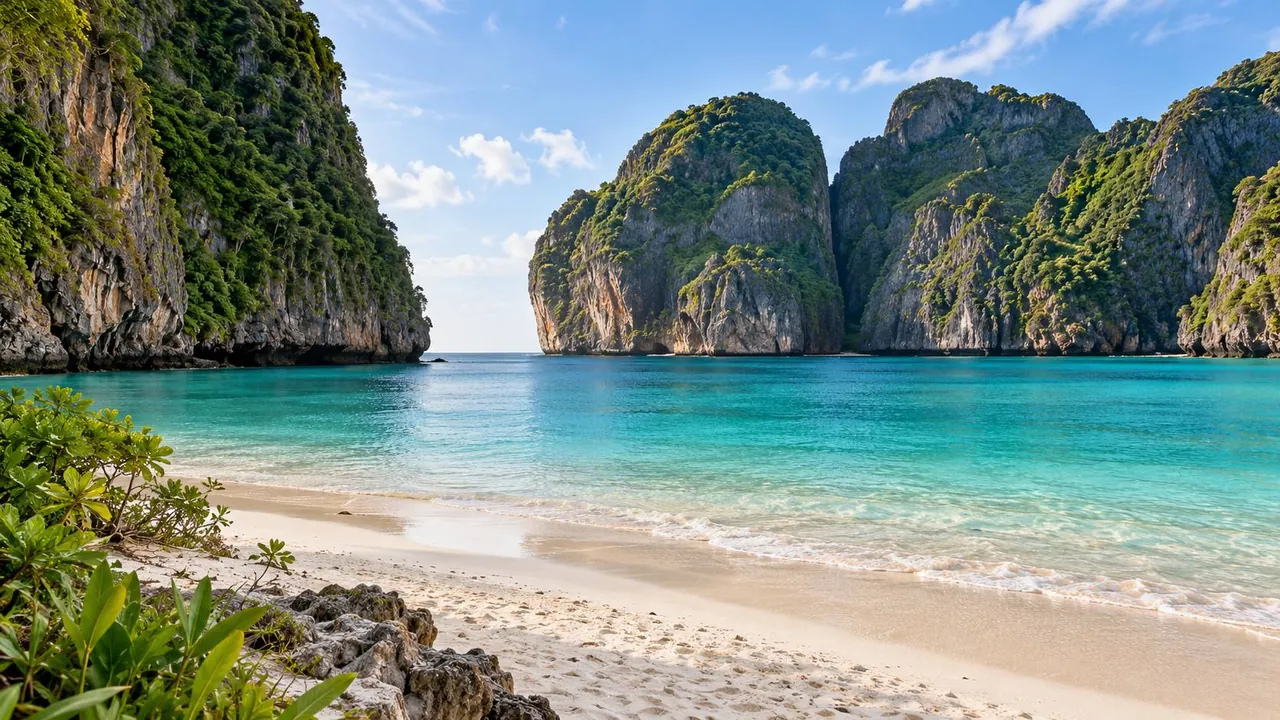
This difference is useful when planning or talking about the destination. It also helps explain why photographs can look different: one image may focus on the rock, while another shows the beach, cliffs or wider bay.
Seeing it with care
A popular landmark can become crowded, and the landscape is more enjoyable when visitors respect the local guidance. Stay in permitted areas, follow park instructions and avoid climbing on or disturbing natural formations. The scenery has lasted far longer than the film, and protecting it helps preserve the place beyond its screen fame.
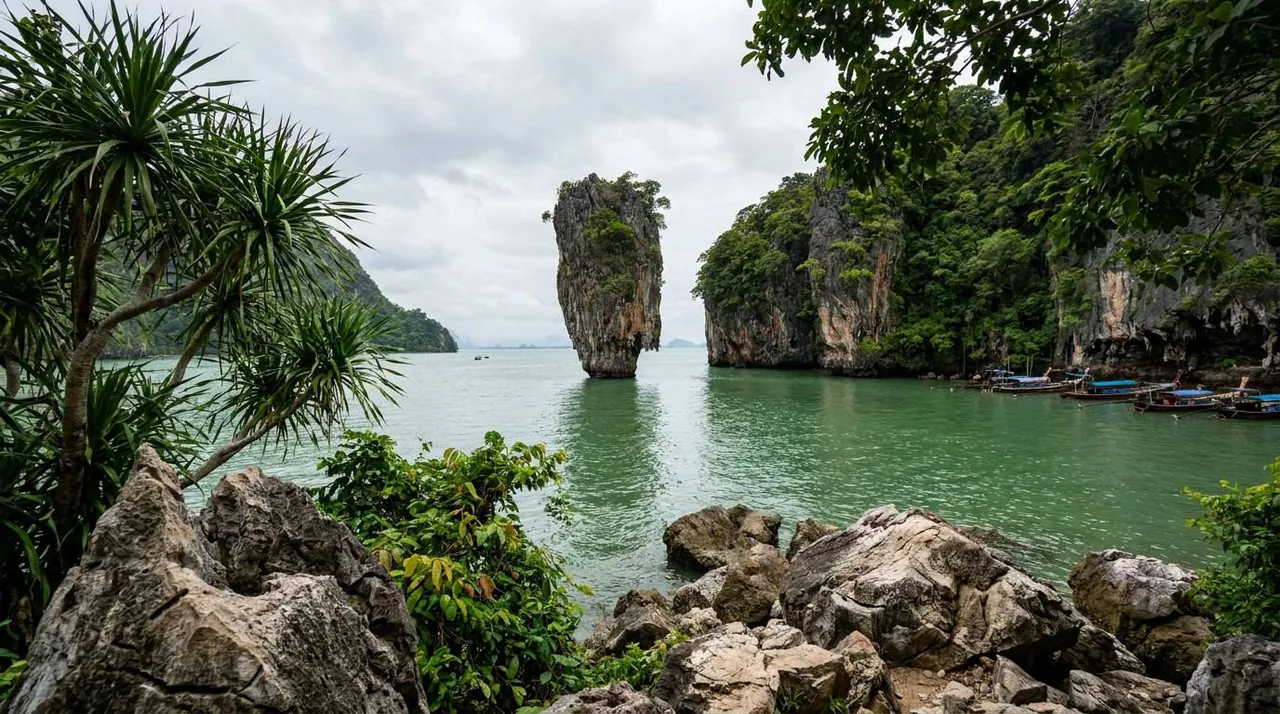
The James Bond connection is a memorable piece of the story. But once the movie reference fades into the background, what remains is a striking corner of Phang Nga Bay: unusual limestone forms, open water and a landscape that is unmistakably its own.