The photographs you keep from a day at sea are often simple ones: a cup of coffee with an island behind it, your children laughing in the shade, or the wake stretching away from the stern. A private yacht gives you several different settings without having to spend the whole trip posing.
Choose a few moments you would like to remember, then leave room for the day to happen. These seven ideas combine people, details and scenery, so your photographs tell the story of the trip rather than repeating the same view from the bow.
You can try them with a phone or discuss them with a photographer before your charter. The illustrations show possible compositions on generic yachts; the layout and views on your chosen boat will be different.
1. Coffee in the Cockpit: A Quiet Opening Frame
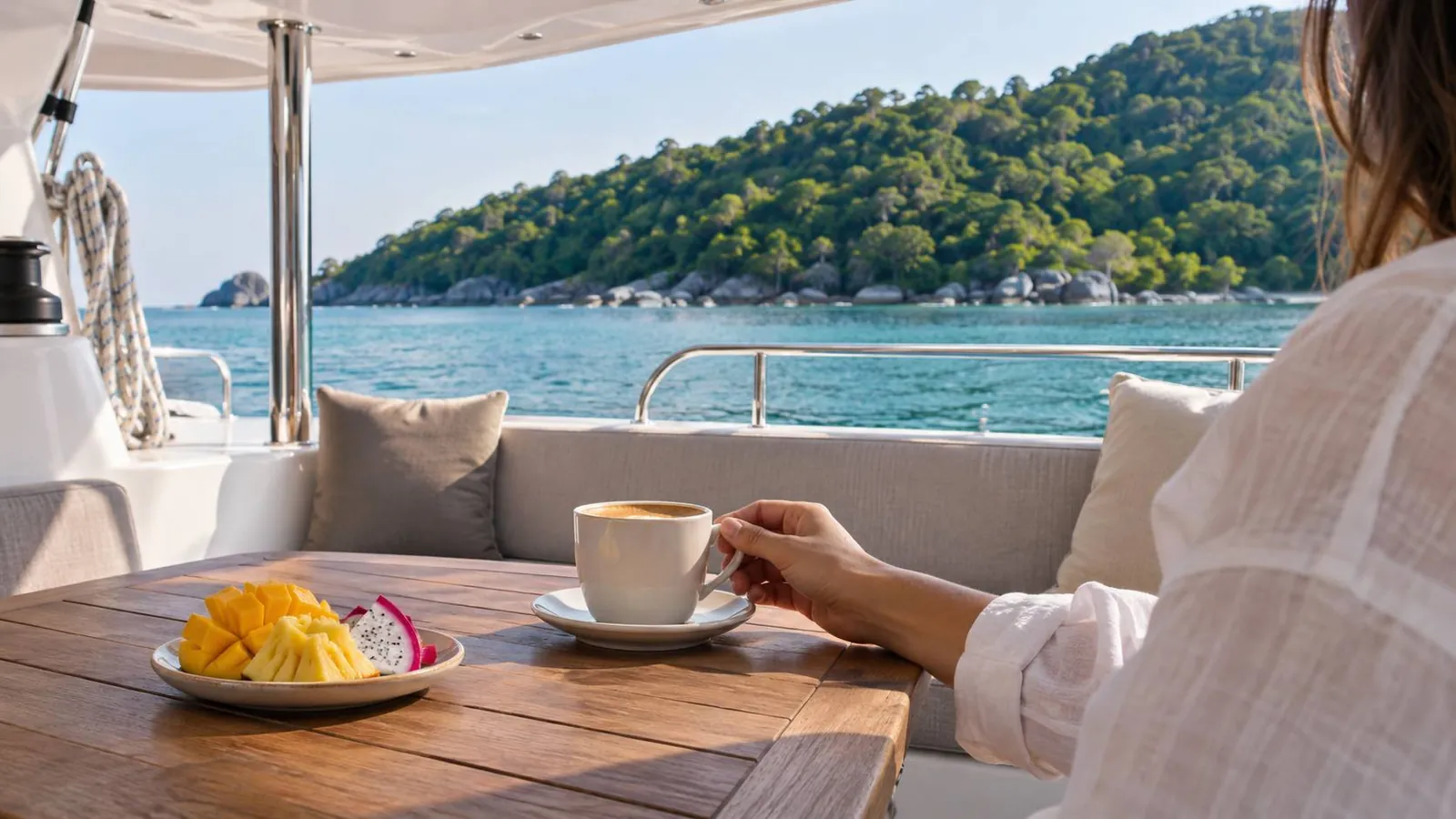
Start with a small detail and let the setting explain where you are. A cup on the table, a relaxed hand and a glimpse of an island through the cockpit can make an inviting first photograph.
Shoot from a seated position, with the cup or fruit plate in the foreground and the water beyond. Move the camera slightly until the horizon and the table edge feel balanced. Leave a little space around the subject so the picture does not look crowded.
Soft light in the shaded cockpit is a useful starting point. If the sea outside looks very bright, try a different angle instead of forcing both the darkest corner and the brightest sky into the frame. Put bags and loose packaging aside while keeping walkways clear.
A linen sleeve, a simple ceramic cup and a small fruit plate are enough. If breakfast or a special morning setup is part of your idea, arrange it when booking; it is not included automatically in every charter.
2. An Island Portrait: Leave Room for the View
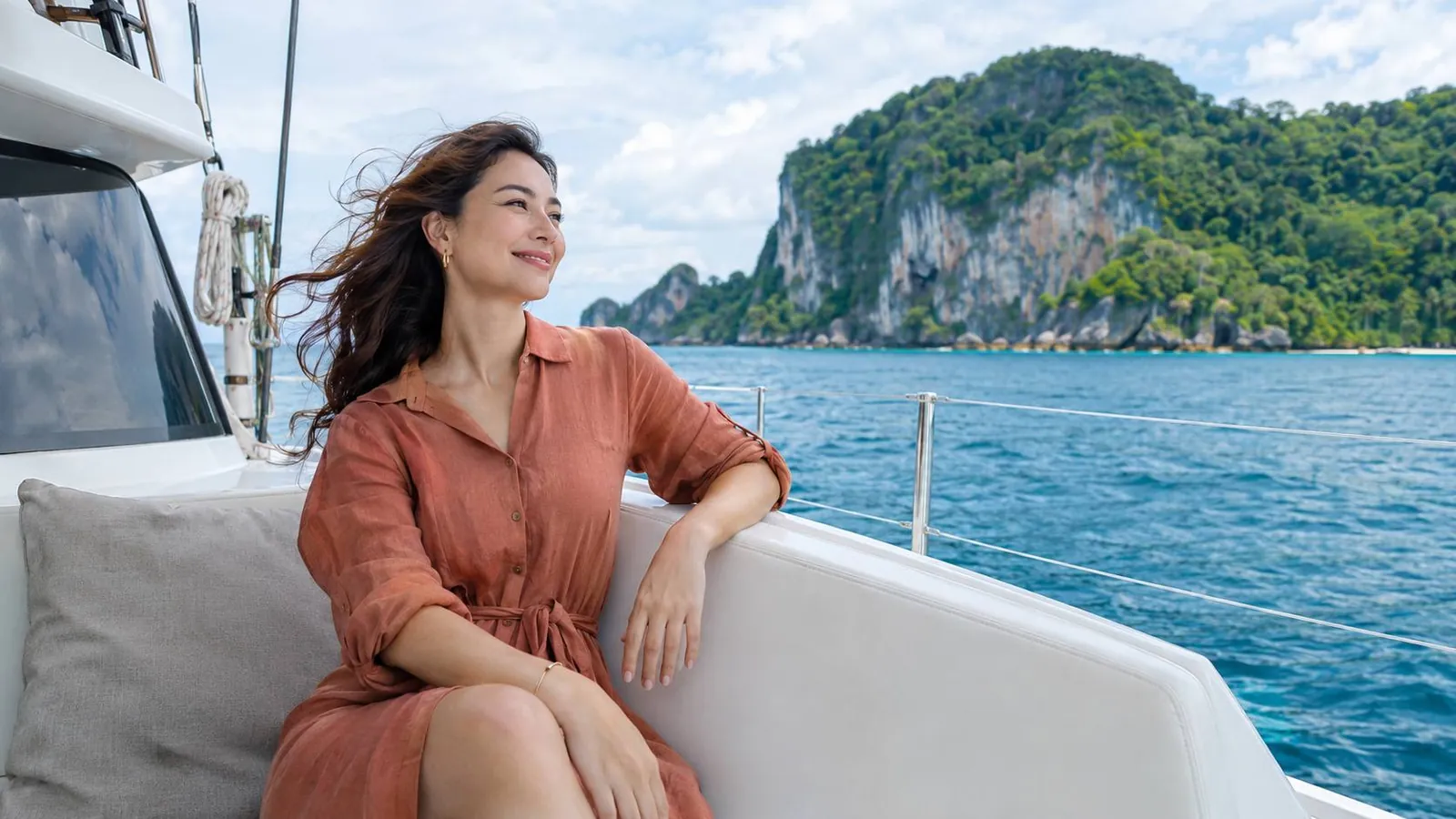
A good holiday portrait shows both the person and the place. Find a comfortable seat with an island or coastline behind it, then frame the person slightly to one side so there is space for the scenery.
Ask them to turn towards the view, adjust a sleeve or simply talk to you. A small natural movement can make the portrait feel more relaxed than holding a pose. Check that a mast, rail or distant cliff edge is not running directly through their head in the composition.
For phone photographs, start with the main camera and avoid placing a face at the very edge of an ultra-wide frame, where it may look stretched. Try an ordinary photo before using portrait mode: you may want the island to remain recognisable.
Solid colours such as cream, muted blue, olive or terracotta are easy to combine with sea and sky. Bring an outfit you can sit and move in comfortably. The crew can suggest an appropriate place to take the picture; there is no need to climb onto the rails.
3. A Family Moment: Photograph the Conversation
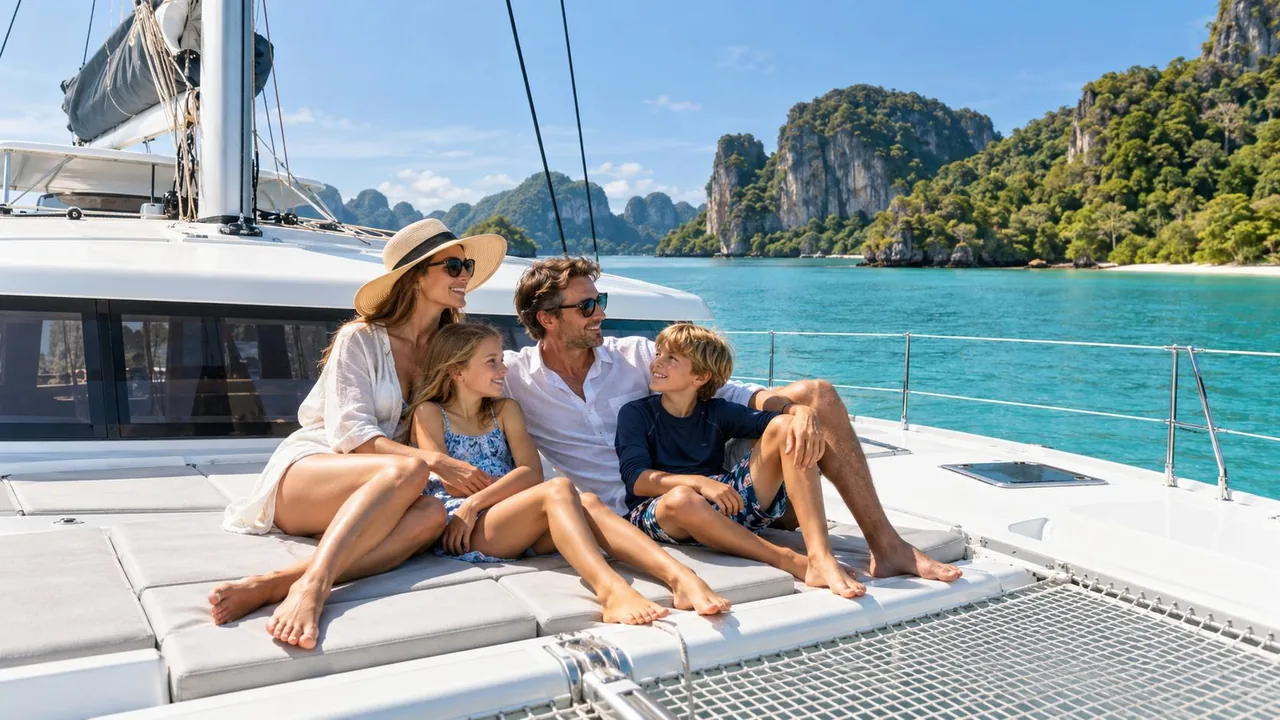
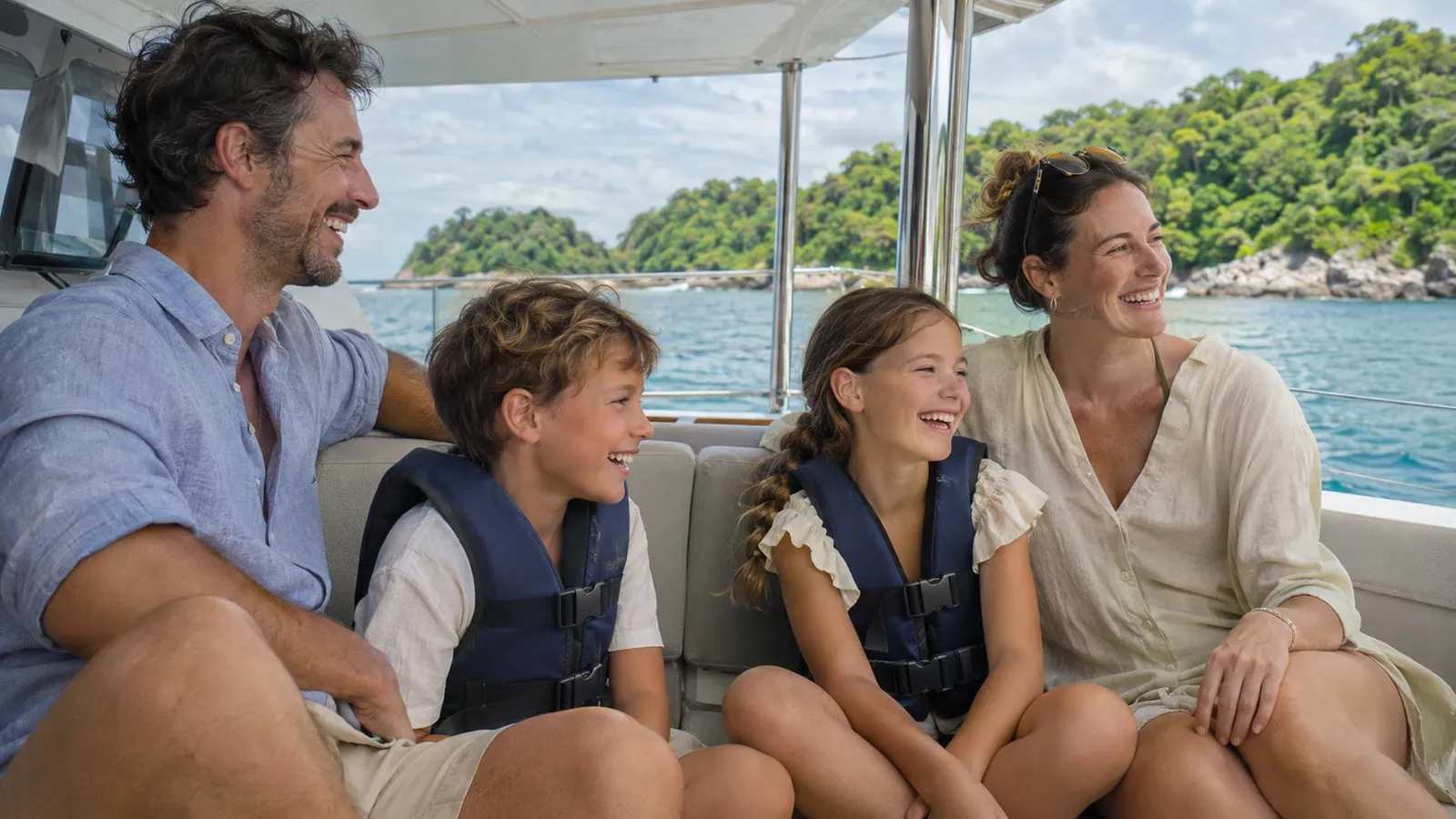
For a family photograph, start with something everyone can enjoy together: looking at the coastline, sharing a joke or choosing the next song. Let the picture grow out of that moment.
Bring the camera closer to the children's eye level rather than photographing everyone from above. Take a short sequence, then put the phone down and let the conversation continue. A few unplanned expressions can be more memorable than making every person look at the lens at once.
The shaded cockpit is a useful setting to discuss because people can sit together. Keep the arrangement comfortable, with children beside an adult and everyone following the crew's safety instructions. Life jackets stay on whenever required; they are part of the day and do not need to be hidden for a photograph.
For clothing, choose a small palette of colours that work together without making everyone wear an identical outfit. Before sharing pictures publicly, check that the people in them are happy for you to do so.
4. Lunch and Little Details: Add Variety to the Story
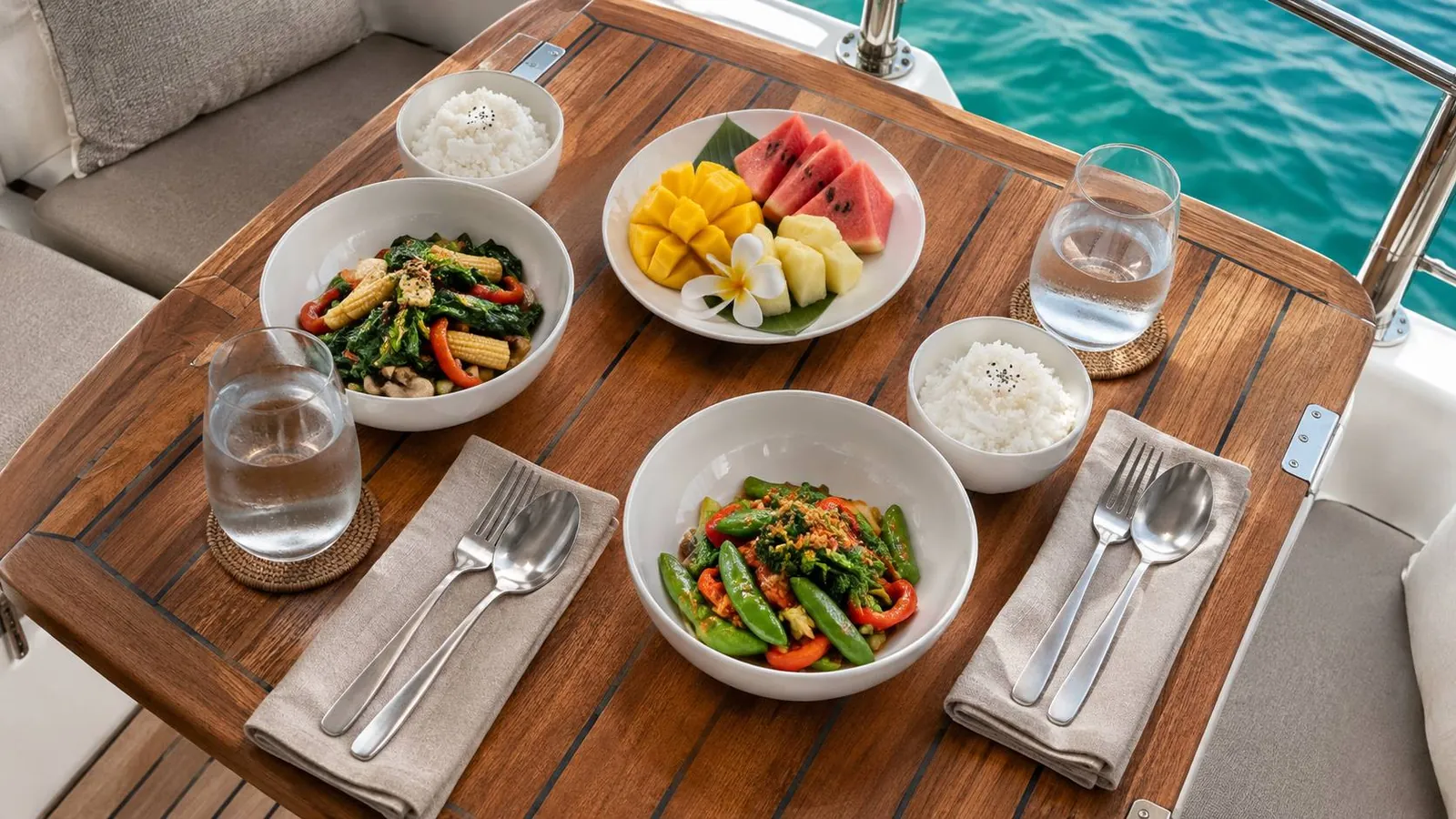
Between portraits and wide views, photograph a few details: lunch arriving at the table, fruit beside a glass of water, a folded napkin or sunlight on the wood. These frames bring texture and variety to the set.
Try an overhead view from a normal seated or standing position, or a low angle across the table with the sea visible behind it. Never climb onto furniture for a higher angle. A modest arrangement with two or three clear subjects is often easier to photograph than the entire lunch spread.
Shade can help you avoid strong glare on glasses and harsh shadows across food. Keep the colours natural when editing, so the dishes still look like the meal you enjoyed. Photograph the table briefly before everyone starts eating, then let lunch be lunch.
Ask before rearranging service items, and keep the crew's working space clear. If you want a particular menu or decorative table setting, discuss it beforehand so it can be included in the plan and quotation.
5. The Passage: Let the Wake Show the Movement
A photograph of the passage connects one stop to the next. The wake, a section of the cockpit and a distant island can capture the feeling of travelling without another posed portrait.
Find a position approved by the crew, stay securely inside the boat and frame the view from there. You can include a small part of the yacht to give the photograph context: a seat edge, a rail or a hand resting naturally. Keep the horizon level unless you deliberately want a tilted composition.
On a phone, a short burst can help you choose a frame with a pleasing pattern in the water. A few seconds of video can also sit well beside the still photographs. Keep a secure hold on the device and stay clear of the helm and working crew.
The wake will depend on the boat, its speed and the conditions. Let the picture reflect the actual passage; a sailing yacht does not have to be under sail for the day to feel like a yacht trip.
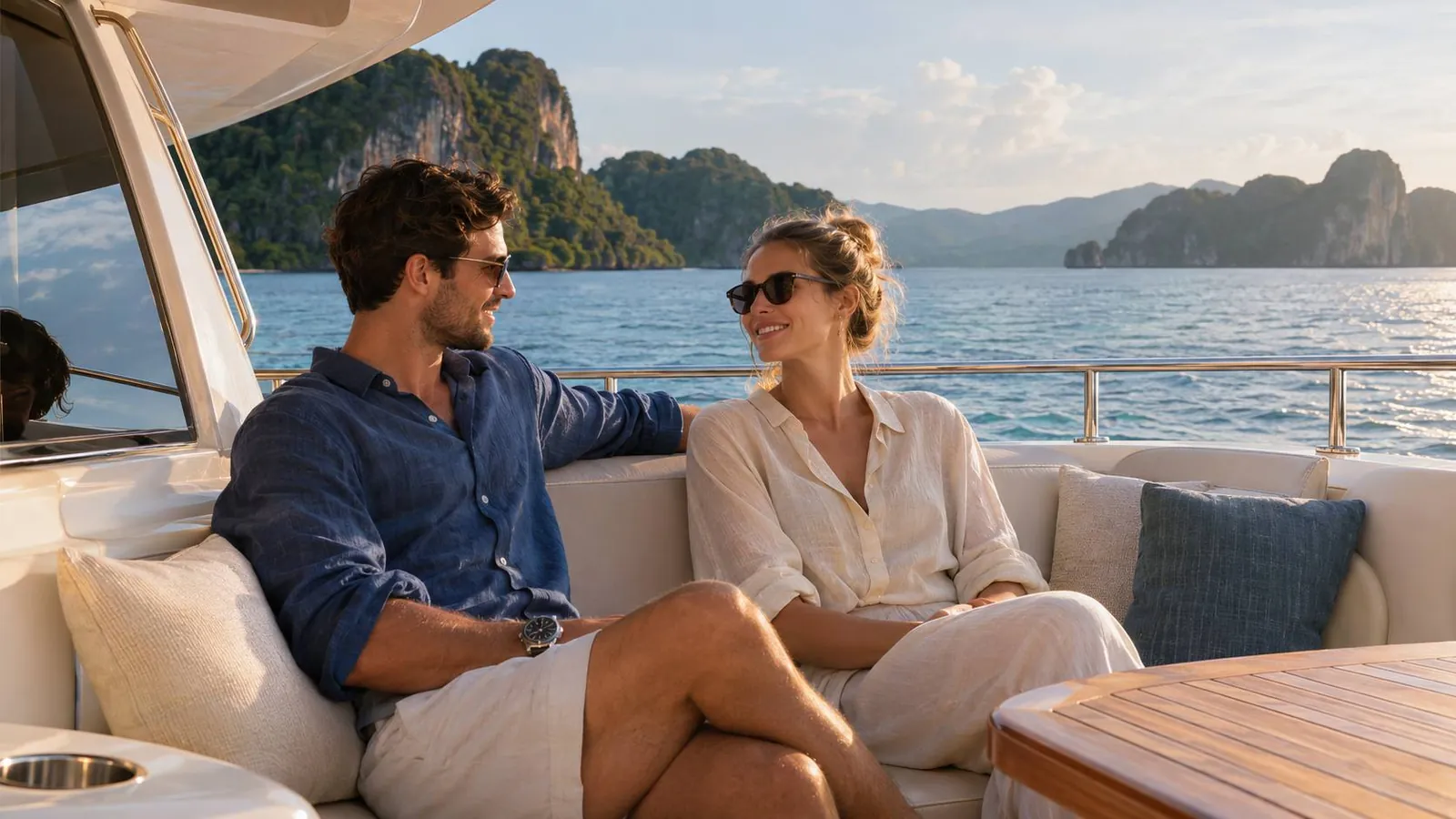
6. Late-Afternoon Light: A Portrait for Two
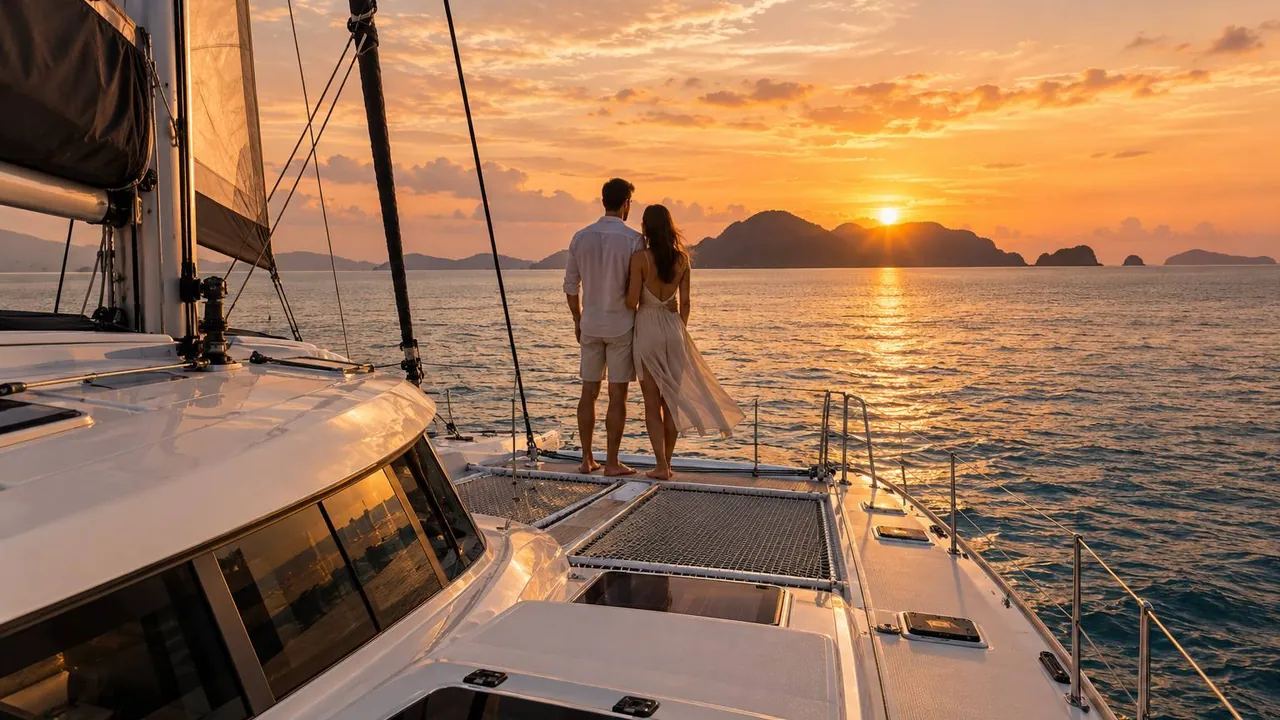
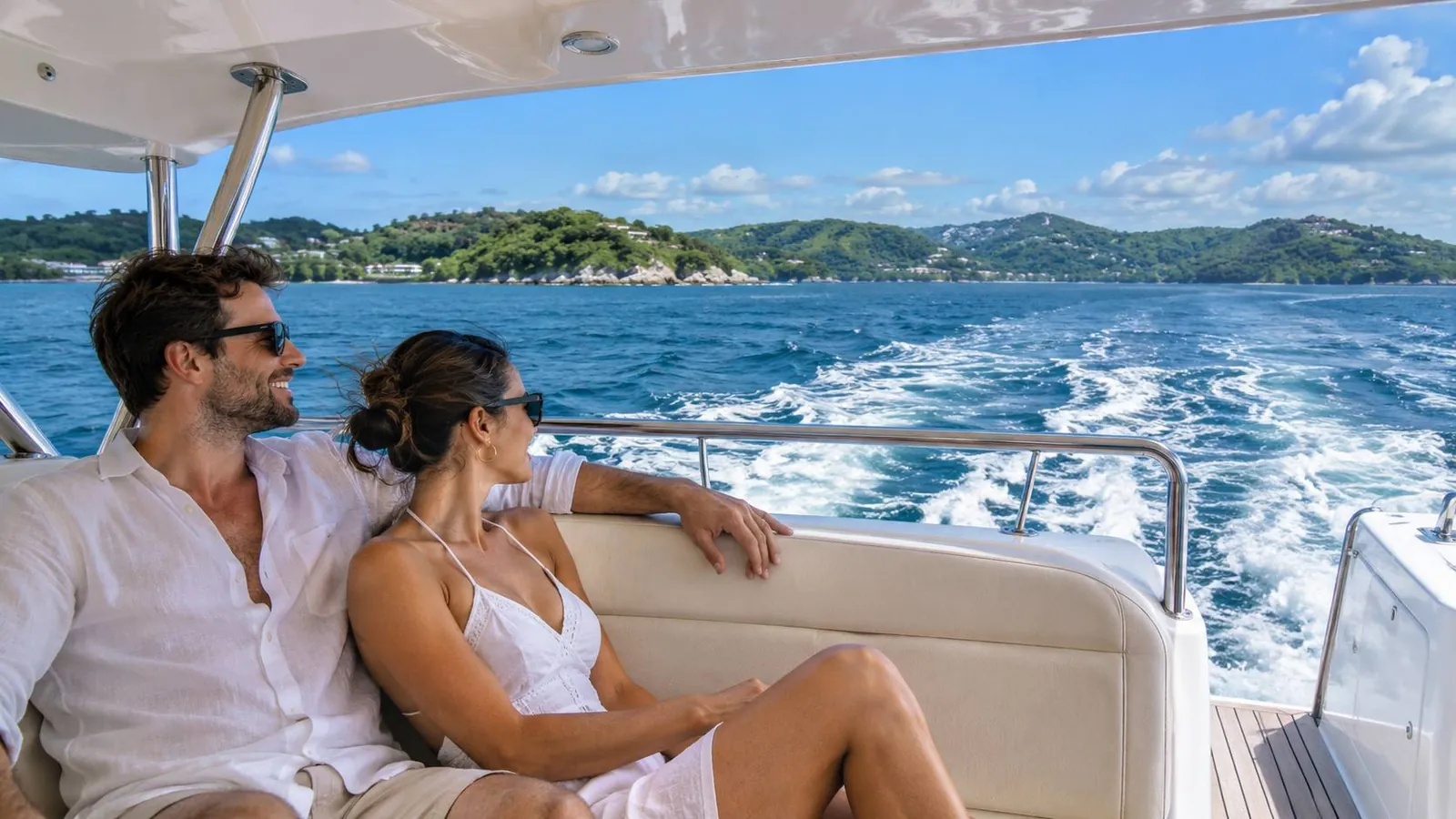
When lower afternoon light reaches the boat, try a quiet portrait of two people sitting together. Start with conversation rather than a formal pose, and leave enough room in the picture to show the water around them.
Side light can add warmth and shape to faces. If looking towards the sun makes everyone squint, turn slightly and try another angle. On a phone, tap on a face and adjust the exposure gently if needed; check that skin still looks natural and that the brightest part of the sky is not distracting.
A pale shirt, a light layer and simple fabrics are enough for this frame. You do not need a large decorative setup to give it a sense of occasion.
If this photograph is important to you, mention it before booking so the team can consider the charter timing and route. The light depends on the weather and the boat's position. Plan it within the agreed daytime programme rather than assuming the trip can be extended after sunset.
7. The Yacht in the Landscape: Step Back
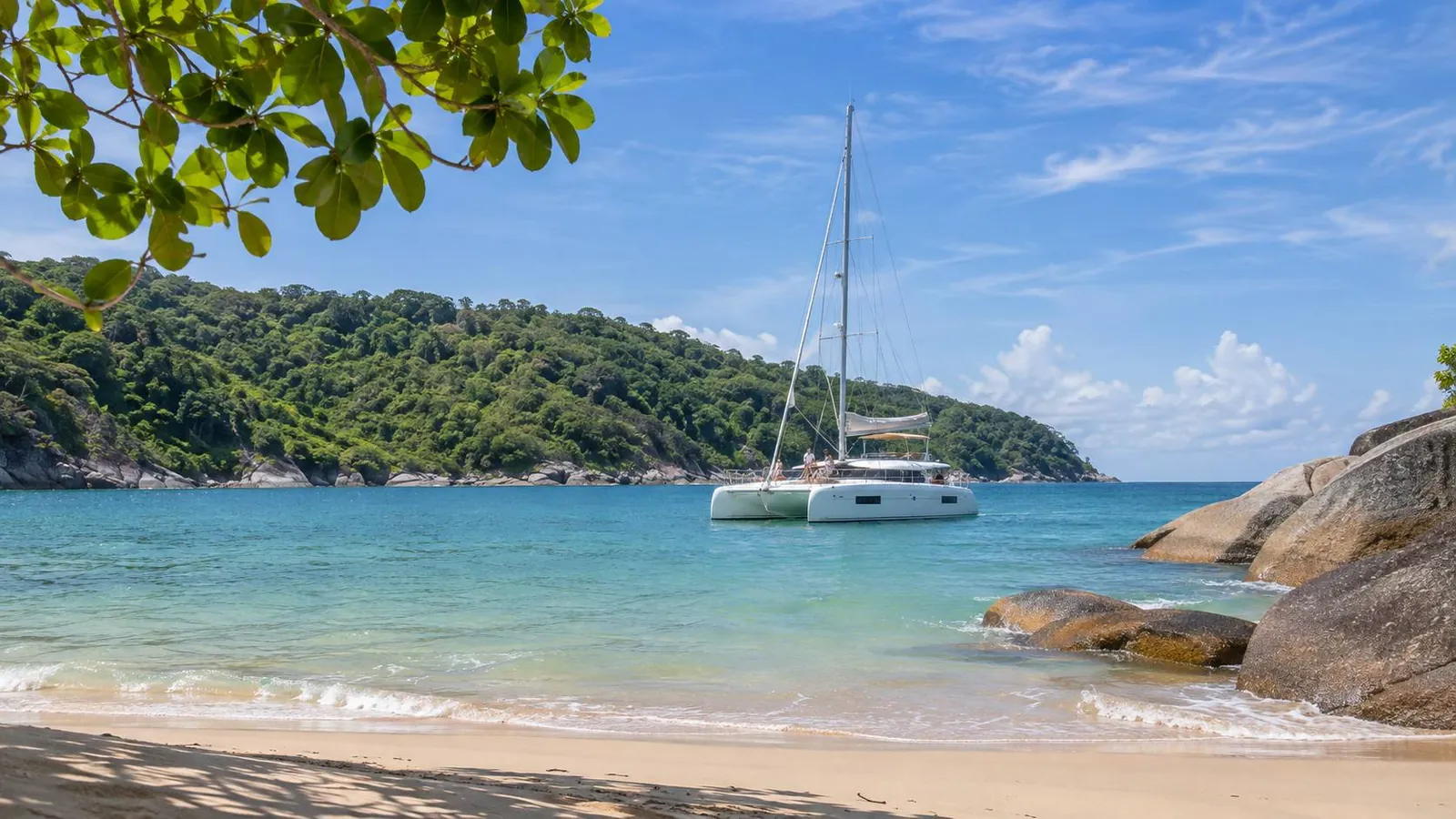
Finish the set with a photograph that shows the yacht as part of the place. If your agreed itinerary includes time ashore, a beach or other permitted viewpoint may offer a different perspective on the boat at anchor.
Keep the yacht small enough to leave room for the water and coastline. A few leaves or a rock at the edge of the frame can add depth, but the view should still feel open. Try a horizontal version for a wide landscape and a vertical version for your phone album or social post.
This idea depends on the actual stop and the available viewpoint. Ask the crew whether going ashore is part of the plan and where it is appropriate to take photographs. Do not improvise a swim or a separate boat transfer just to get the shot.
If you stay aboard all day, make a wide landscape from a suitable place on deck instead, using a small part of the yacht in the foreground. You can tell the story of being at sea without an aerial photograph.
Choose a Route That Fits Your Photographs
Think about the backdrop you want before choosing the itinerary. Routes from Chalong towards Racha Yai and Coral Island are options for beach-and-sea scenes. Ao Po is a starting point for Phang Nga Bay's limestone scenery. Our guide to Chalong and Ao Po explains the difference.
The best plan leaves time to enjoy the place as well as photograph it. Pick two or three priority frames and let the rest happen naturally. Avoid building a day around a long list of distant backdrops.
A Small Kit Is Enough
Bring a charged phone or camera, a clean lens cloth, secure protection for the device and one simple change of clothes if you want different looks. Clean the lens before starting, especially after handling sunscreen. Keep spare items in a small bag rather than spreading them across the seats.
Ask someone in your group to take a few photographs of the usual photographer too. If you want professional coverage, request a photographer in advance and confirm the fee, shooting time and delivery of the images. Do not assume that photography is part of the crew's service.